On 24 July 2011 Burger King tweeted a link to its restaurant locator, bit.ly/19BFiM. On 15 November 2026 the same link opened Wikipedia’s list of Nazi concentration camps. The tweet was not edited. A plus sign at the end of a Bitly link opens a page with its destination and the date it was created. For this one, the date was that morning.
From the outside, the link still looks valid, in a post from a name the reader knows. It now takes them somewhere completely different, possibly misleading or demeaning. The brand sees nothing wrong: its account posted nothing, and nothing shows it was touched. Reports found the same in old posts from public figures and government agencies.
Bitly said an issue let bad actors “repurpose certain old, inactive links”, suspended the accounts involved and began disabling the links. Its help pages say a link’s back-half “cannot be reused even if you delete or hide the link”. How these were created again, it has not said.
Ransomnews checked 97 Bitly links in Donald Trump’s old tweets. Forty were the originals, and seven led somewhere new. Almost all the rest had been created again years later, yet led where the tweets suggest. Most of those came from one 17-minute run in May 2023.
Bitly’s page for a link shows two things: where it goes, and when it was created. The date is what gave the 2011 links away. Read on 15 November, the May 2023 ones showed dates years after their tweets, and so did the seven that went elsewhere. On the page they looked the same: an old code with a new date. Only where they led told them apart. By that night the seven no longer redirected. The ones that led home still worked at Ransomnews’s last check, and Ransomnews does not know who made them. A repair and a takeover leave the same trace.
Run your own
The thread offered one fix more than any other: “running one from your own domain lets you own the 301 redirect permanently”. Another commenter ranked rot as perhaps the bigger problem. When a shortener goes, its links stop working, and unlike a normal dead URL, nobody can guess from the slug what they pointed to.
Around 2013 everyone was throwing Postgres or MongoDB into the mix. I built a URL shortener out of curiosity, to see how little it needed. It needed nginx and Redis, and a Lua script inside nginx for all the logic. Codes were seven or eight random characters, and delete removed the key. A later create could draw a deleted code. Unlikely, and not perceived as a risk. Seven or eight random characters is billions of codes, and the only person making links was me, for demos.
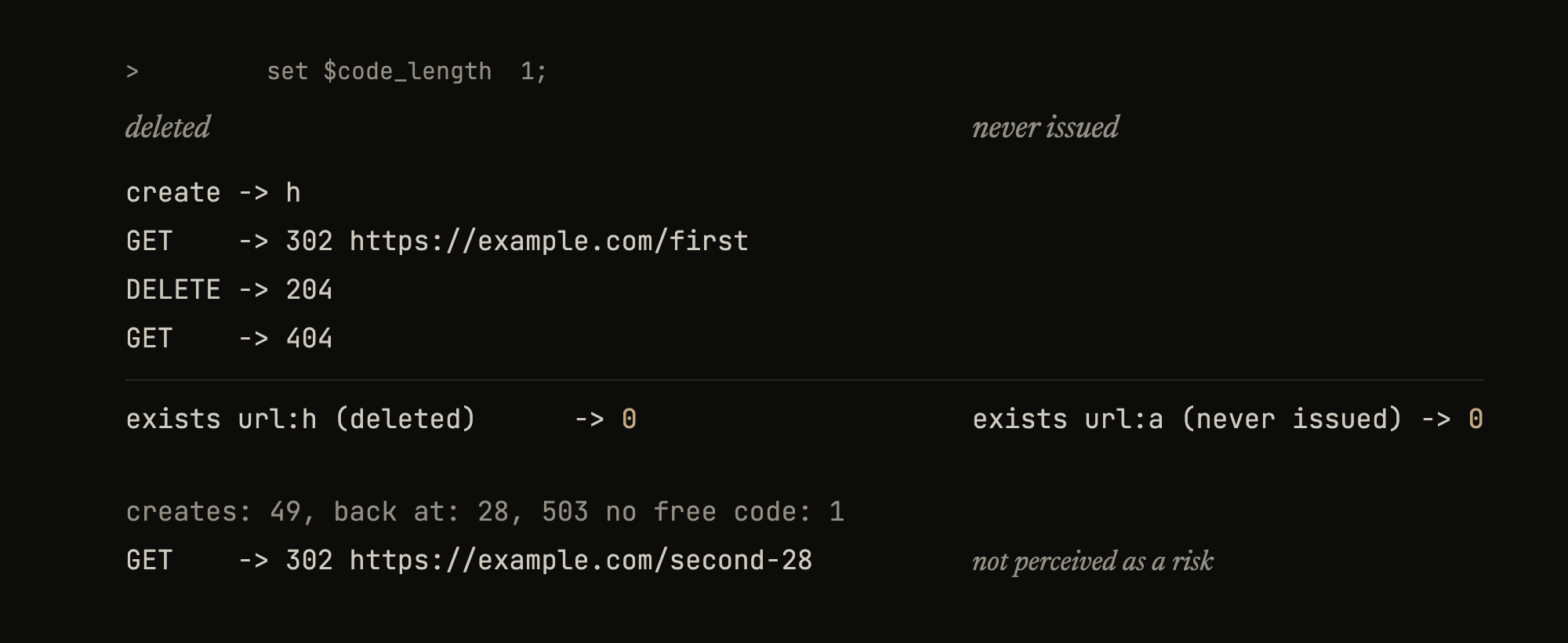
This week I ran the gist with the code length set to one character: 64 codes. I made a link, deleted it, and kept creating. The deleted code answered 404, then came back on a later create, redirecting to the new URL. With 64 codes, it comes back within 64 new links. In Redis, the deleted code and a code never issued both answer EXISTS with 0.
My store kept the URL under the code and nothing else. I did not find a purpose to keep track of a creation date. A code issued twice there redirects like any other, and there is no page to add a plus sign to. A deleted code at least answers 404.
The 404 says nothing is there. It cannot say anything was.